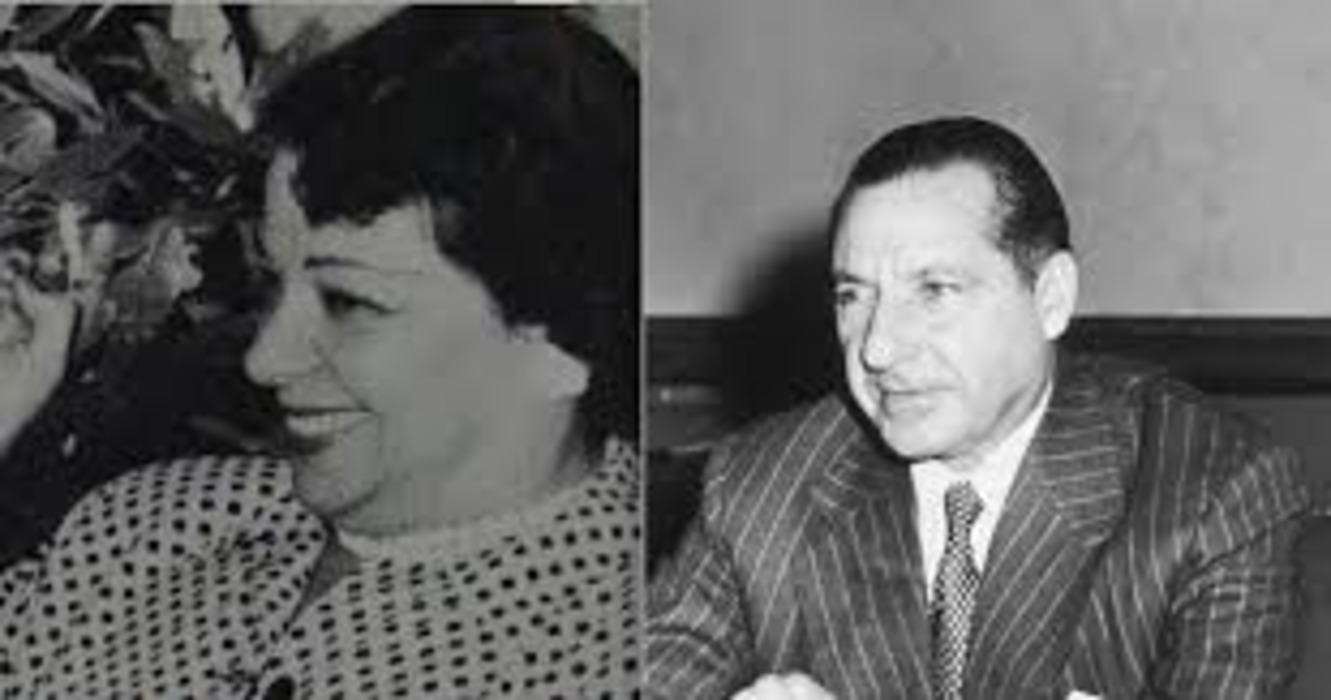











In the evolving world of digital knowledge and cultural preservation, the story of Sherrill Redmon stands out as a powerful reminder that some of the most influential work in history happens far from public spotlight. While startup founders and tech professionals often focus on disruption and scale, Redmon’s legacy speaks to something equally transformative: the careful construction of intellectual infrastructure that shapes how future generations understand truth, identity, and history.
The keyword sherrill redmon may not dominate mainstream tech conversations, yet her work sits at the intersection of information science, feminism, and institutional innovation. For entrepreneurs building knowledge platforms, AI systems, or digital libraries, her journey offers a surprisingly relevant blueprint. She didn’t just preserve documents—she helped redefine whose stories deserve to be preserved in the first place.
To understand her impact, it’s important to look beyond biography and into the systems she influenced. Redmon’s work at the Sophia Smith Collection at Smith College became a turning point in how feminist history was archived, organized, and made accessible in the digital age.
Sherrill Redmon and the Foundations of a Quiet Revolution
Before becoming associated with large-scale archival transformation, Sherrill Redmon’s early life and academic path followed a traditional scholarly trajectory. She earned her PhD and initially engaged in academic work rooted in political science and historical research. However, her shift into archival leadership marked a pivotal turning point—not just for her career, but for feminist historiography as a whole.
The evolution of sherrill redmon as a professional identity reflects a broader shift happening in academia during the late 20th century. Institutions were beginning to recognize that archives were not neutral repositories—they were curated systems shaped by power, exclusion, and narrative control. Redmon entered this space with a critical eye and a systems-thinking mindset that would resonate strongly with modern digital product leaders.
Her work demonstrated that archives are not passive storage systems; they are active engines of cultural memory.
From Personal Transition to Institutional Impact
A notable aspect of Redmon’s story is her transition from private life into public intellectual leadership. After her marriage to Roger Clinton Jr., she eventually shifted her focus entirely toward academic and archival work. Rather than remaining in the periphery of political visibility, she built a professional identity grounded in scholarship and institutional reform.
At Smith College, she became director of the Sophia Smith Collection, one of the most significant repositories of women’s history in the United States. Under her leadership, the collection expanded both in scope and accessibility, bringing underrepresented voices into academic and public discourse.
For digital professionals, this phase of sherrill redmon’s career is particularly instructive. It demonstrates how leadership is not always about invention from scratch—it can also be about restructuring existing systems to unlock hidden value.
Redmon’s Archival Philosophy in Practice
Redmon’s approach to archival science was shaped by a simple but radical idea: history is incomplete if it only reflects dominant narratives. This philosophy translated into practical decisions about collection development, classification, and access.
She prioritized materials that documented women’s activism, labor history, civil rights movements, and everyday lived experiences. Instead of treating these as “supplementary” materials, she positioned them as central to historical understanding.
This approach mirrors how modern startups think about user-generated content or decentralized data sources. Just as platforms today rely on diverse inputs to build intelligence systems, Redmon understood that archives must reflect diversity to remain intellectually honest and socially relevant.
Comparative Lens: Traditional Archives vs. Redmon’s Model
To understand the significance of her contributions, it helps to compare traditional archival models with the approach influenced by Redmon’s leadership.
| Dimension | Traditional Archives | Redmon-Inspired Archival Model |
| Focus | Elite political, academic, and institutional records | Inclusive documentation of marginalized voices |
| Access | Restricted, on-site, academic-only | Expanding public and research accessibility |
| Curation Philosophy | Preservation-first, neutral stance | Context-driven, socially aware selection |
| Narrative Control | Centralized institutional authority | Distributed representation of lived experiences |
| Technological Integration | Late adoption of digital systems | Early adoption of digitization and metadata expansion |
This shift may seem academic on the surface, but its implications are deeply technological. Today’s data engineers, UX designers, and AI researchers face similar challenges: what data gets included, who defines relevance, and how systems shape perception.
In that sense, sherrill redmon’s work foreshadowed many of the ethical debates in modern AI and data governance.
The Digital Transformation of Feminist Archives
One of Redmon’s most enduring contributions lies in her role in the early digitization of archival collections. As libraries and universities transitioned into digital systems, she helped ensure that feminist archives were not left behind in analog silos.
This transformation was not simply technical. It required rethinking metadata structures, classification systems, and user access models. Traditional cataloging systems often failed to adequately represent intersectional identities or activist networks. Redmon’s work helped push institutions toward more flexible, descriptive frameworks.
For tech professionals, this is strikingly similar to designing scalable databases or training datasets. The underlying challenge is the same: how do you structure complexity without erasing nuance?
Leadership Lessons from Sherrill Redmon for Modern Founders
Entrepreneurs and startup leaders often look to Silicon Valley case studies for guidance, but sherrill redmon offers a different kind of leadership model—one rooted in patience, institutional change, and intellectual rigor.
Her career suggests that impact does not always require rapid scaling. Instead, it can emerge from sustained investment in systems that outlast individual projects or funding cycles.
Several leadership principles emerge clearly from her work:
She demonstrated that long-term value often comes from infrastructure rather than visibility. While startups chase user growth curves, Redmon focused on building repositories that would remain relevant decades later. This is particularly relevant for founders building data platforms or knowledge ecosystems.
She also modeled the importance of ethical curation. In a world where algorithms increasingly determine what information people see, her archival philosophy underscores the responsibility of system designers to think about representation and bias.
Finally, her career highlights the power of intellectual humility. Rather than positioning herself as the central figure in feminist scholarship, she worked to amplify the voices contained within the archives she curated.
The Broader Cultural Impact of Sherrill Redmon
The influence of Redmon’s work extends beyond academia. Feminist archives have become essential resources for journalists, historians, educators, and policy researchers. They provide evidence-based foundations for understanding social change and gender dynamics across decades.
In the digital era, these archives are increasingly used in computational research, including text mining and cultural analytics. This means that Redmon’s early decisions about structure and accessibility continue to shape machine learning datasets and digital humanities projects today.
For anyone building systems that rely on historical or human data, the sherrill redmon legacy is a reminder that data is never neutral—it is always shaped by decisions about inclusion and omission.
Why Her Work Matters in the Age of AI and Data Platforms
As artificial intelligence systems become more embedded in everyday life, questions about data provenance and representational fairness are becoming urgent. Redmon’s archival philosophy offers a surprisingly modern framework for addressing these challenges.
She understood that the way information is organized affects how it is interpreted. This principle applies directly to recommendation systems, search algorithms, and generative AI models.
In many ways, her work prefigured today’s debates about dataset bias and algorithmic accountability. Where modern engineers debate fairness metrics, Redmon was already grappling with similar questions in the context of historical documentation.
Conclusion: Building Systems That Remember Better
The story of Sherrill Redmon is not just about archival science—it is about the architecture of memory itself. For startup founders, technologists, and digital creators, her legacy offers a different lens on innovation. It suggests that the most meaningful systems are not always the most visible ones, but the ones that preserve complexity without flattening it.
In a world increasingly shaped by data pipelines and AI models, her work reminds us that what we choose to remember—and how we structure that memory—ultimately defines the future we build.
The keyword sherrill redmon therefore represents more than a name in academic history. It represents a philosophy of thoughtful system design, ethical curation, and long-term cultural stewardship.