










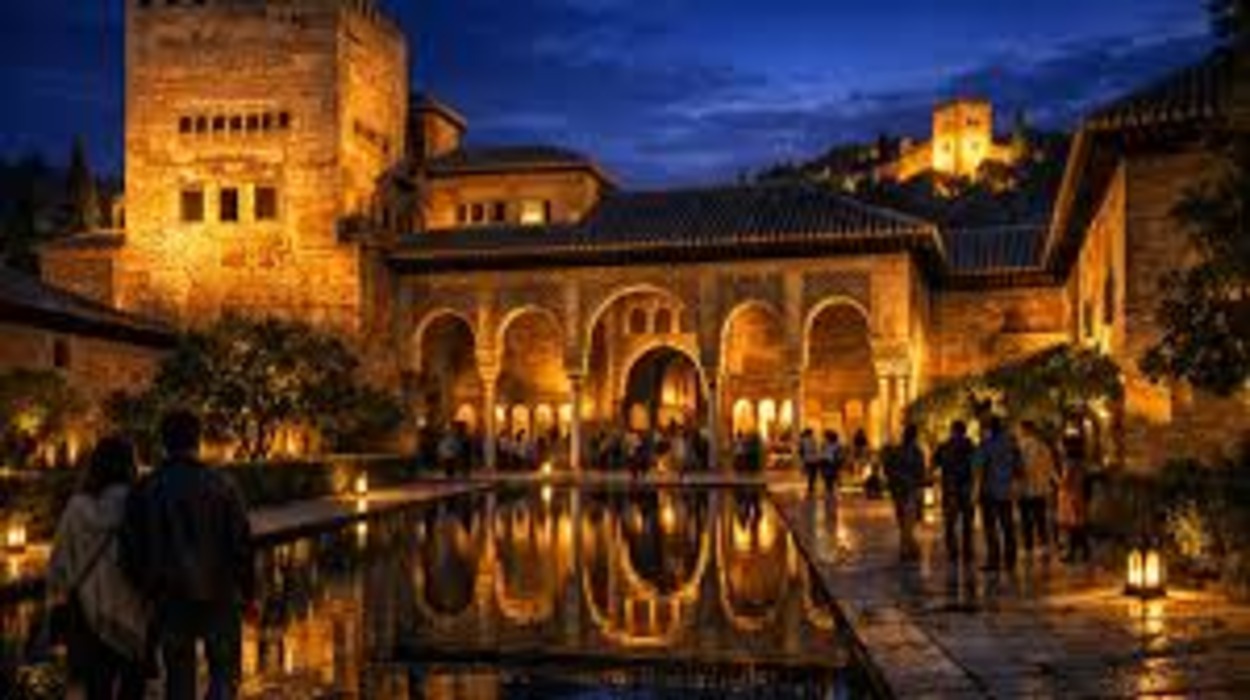
In the evolving world of global tourism, few cases illustrate the intersection of culture, exclusivity, and revenue optimization as clearly as alhambra palace night tour attendance revenue. What was once a purely historical visitation model has transformed into a carefully engineered experience economy, where demand management, pricing strategy, and visitor flow analytics determine not just cultural preservation outcomes—but also financial sustainability.
For startup founders, entrepreneurs, and tech professionals, this shift is more than a tourism story. It is a real-world example of how legacy institutions are adopting modern revenue optimization strategies, similar to those seen in SaaS platforms, entertainment ecosystems, and data-driven mobility services. The way institutions like Alhambra manage night tours is now a blueprint for experience monetization at scale.
Understanding alhambra palace night tour attendance revenue in Context
At its core, alhambra palace night tour attendance revenue reflects the financial performance generated through controlled evening access to one of the world’s most visited heritage sites. The Alhambra, located in Granada, is not just a monument—it is a carefully managed cultural asset where visitor access is tightly regulated to preserve structural integrity and historical authenticity.
Unlike daytime tourism, night tours operate under strict attendance caps. This scarcity is not accidental; it is a deliberate strategy to balance preservation with profitability. By limiting the number of nightly visitors, the institution creates a premium experience that commands higher ticket value while reducing long-term wear on the site.
For digital economy professionals, this model mirrors subscription-based exclusivity strategies used in platforms where access itself becomes a value driver.
The Economics Behind Controlled Night Tourism
The financial structure of night tours at heritage sites like the Alhambra is fundamentally different from mass tourism models. Instead of maximizing volume, the strategy focuses on optimizing yield per visitor.
Night tours typically offer enhanced experiences such as reduced crowd density, atmospheric lighting, guided storytelling, and curated access to select palace areas. These enhancements justify premium pricing and contribute significantly to overall revenue per visitor.
From a revenue perspective, alhambra palace night tour attendance revenue is influenced by three primary variables: ticket pricing, attendance caps, and seasonal demand fluctuations.
To understand how these variables interact, consider the simplified breakdown below:
| Revenue Factor | Description | Impact on Attendance | Impact on Revenue |
| Ticket Pricing | Premium pricing for night access | Limits demand but increases exclusivity | Directly increases per-visitor revenue |
| Attendance Caps | Strict visitor limits per night | Controls overcrowding | Stabilizes long-term preservation |
| Seasonal Demand | Tourism peaks during holidays and summer | High variability in attendance | Creates revenue surges during peak periods |
| Experience Design | Lighting, guided tours, exclusivity | Enhances perceived value | Justifies higher pricing tiers |
| Cultural Branding | UNESCO heritage status and global reputation | Sustains baseline demand year-round | Strengthens long-term revenue stability |
This structure demonstrates a key principle: scarcity, when managed strategically, becomes a monetizable asset.
Why Night Tours Generate Higher Revenue Per Visitor
One of the most important insights in alhambra palace night tour attendance revenue is the disproportionate value of night-time access compared to daytime visits.
Night tours are inherently limited in capacity, which allows operators to charge premium pricing without compromising visitor satisfaction. The experience is more immersive, less crowded, and often emotionally more impactful due to lighting and ambiance design.
This aligns closely with principles used in luxury hospitality, live events, and even digital platforms where premium tiers offer enhanced access and exclusivity.
For example, just as streaming platforms monetize premium content tiers, heritage institutions monetize exclusivity in physical space.
The Role of Experience Design in Revenue Optimization
Modern tourism revenue is no longer driven solely by access—it is driven by experience architecture. In the case of the Alhambra night tours, lighting design, narrative storytelling, and spatial choreography all contribute to perceived value.
This is where cultural heritage management intersects with experience engineering. Each element of the night tour is carefully curated to create emotional resonance while maintaining historical authenticity.
From a business perspective, this translates into higher willingness to pay. Visitors are not just buying entry—they are buying a memory, a narrative, and a sense of exclusivity.
For professionals analyzing alhambra palace night tour attendance revenue, this demonstrates how intangible value can be converted into measurable financial outcomes.
Demand Management and the Economics of Scarcity
One of the most powerful drivers of revenue in night tourism is artificial scarcity. By limiting the number of available tickets, institutions ensure that demand consistently exceeds supply.
This creates a competitive booking environment where tickets are often reserved weeks or months in advance. The result is predictable revenue streams and reduced reliance on discounting strategies.
Scarcity also enhances perceived value. When access becomes difficult, it becomes more desirable. This psychological effect significantly contributes to the financial success of night tours.
In digital business terms, this is similar to limited product drops, exclusive memberships, or early-access releases.
Comparing Daytime vs Night Tour Revenue Models
To better understand the financial differentiation, it is useful to compare daytime and night tour structures within heritage sites like the Alhambra.
| Dimension | Daytime Tours | Night Tours |
| Visitor Volume | High capacity | Limited capacity |
| Pricing Strategy | Standard entry pricing | Premium pricing model |
| Experience Type | General exploration | Curated immersive experience |
| Revenue per Visitor | Moderate | High |
| Crowd Density | High | Low |
| Booking Availability | Flexible | Restricted and advanced booking required |
This comparison highlights why alhambra palace night tour attendance revenue plays a disproportionately important role in overall financial sustainability despite lower visitor numbers.
Digital Transformation in Heritage Revenue Systems
Behind the scenes, modern heritage sites are increasingly adopting digital tools to manage attendance, pricing, and visitor flow. Online booking systems, dynamic pricing algorithms, and real-time capacity management are now essential components of tourism infrastructure.
These systems allow operators to optimize attendance patterns and maximize revenue efficiency without compromising preservation goals.
For tech professionals, this represents a fascinating convergence of cultural heritage and digital transformation. Institutions like Alhambra are effectively operating as hybrid physical-digital platforms.
Seasonality and Revenue Fluctuation Dynamics
Another critical factor in alhambra palace night tour attendance revenue is seasonality. Tourism demand in Granada fluctuates significantly depending on weather, holidays, and international travel trends.
During peak seasons, night tours often reach full capacity, maximizing revenue potential. In off-peak months, however, institutions must balance accessibility with financial sustainability.
Some heritage sites respond to this challenge by adjusting pricing dynamically or introducing seasonal programming to maintain engagement levels.
This adaptive approach mirrors revenue optimization strategies used in airlines, hospitality, and SaaS subscription models.
Cultural Preservation vs Commercial Sustainability
One of the most complex aspects of managing night tours is balancing revenue generation with cultural preservation. Unlike typical commercial attractions, heritage sites must prioritize long-term conservation over short-term profit.
This creates a unique operational constraint: revenue cannot be maximized indefinitely without risking structural degradation.
As a result, alhambra palace night tour attendance revenue is inherently capped by preservation requirements. This constraint forces innovation in pricing strategy rather than volume expansion.
For entrepreneurs, this is a powerful example of constraint-driven innovation—where limitations actually shape more efficient and sustainable business models.
The Future of Heritage Tourism Revenue Models
Looking forward, heritage tourism is expected to become even more data-driven. Artificial intelligence, predictive analytics, and visitor behavior modeling will likely play a greater role in optimizing attendance and pricing strategies.
Dynamic ticket pricing based on demand forecasting could further refine revenue efficiency. Augmented reality experiences may also enhance night tours without increasing physical strain on historical sites.
In this evolving landscape, institutions like Alhambra will continue to serve as benchmarks for balancing cultural integrity with modern revenue optimization.
Conclusion
The story behind alhambra palace night tour attendance revenue is not just about tourism economics—it is about the evolution of experience-based value creation. By transforming limited access into a premium, carefully curated offering, heritage institutions have created a sustainable model that balances preservation with profitability.
For startups, entrepreneurs, and digital professionals, the key takeaway is clear: scarcity, when thoughtfully designed, is not a limitation—it is a strategic advantage.
In a world where attention and access are increasingly valuable, the Alhambra’s night tour model demonstrates how even centuries-old institutions can operate with modern economic intelligence, turning cultural heritage into a refined and sustainable revenue system.


