










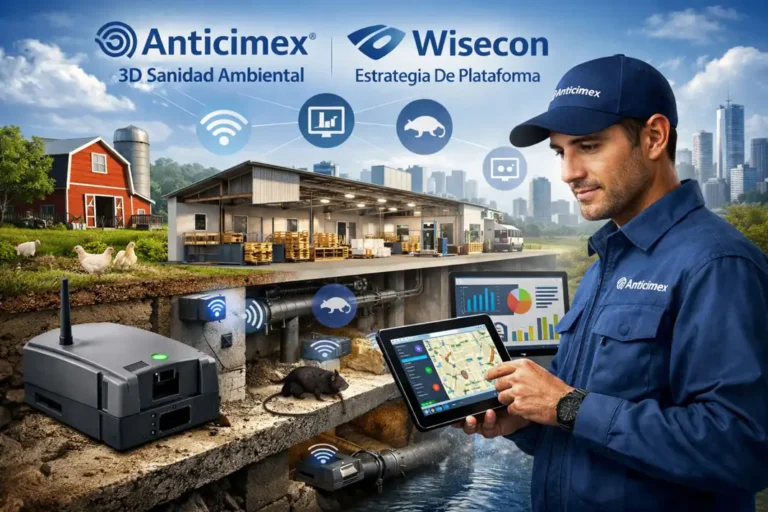
In today’s rapidly evolving environmental services landscape, the intersection of anticimex 3d sanidad ambiental / wisecon estrategia de plataforma represents a broader shift in how pest control, hygiene systems, and digital platform strategies are converging into data-driven ecosystems. For startup founders, entrepreneurs, and tech professionals, this is not just an industry update—it is a blueprint for how traditional field services are being transformed through technology, analytics, and scalable platform thinking.
Companies like Anticimex have long been associated with advanced pest control and environmental hygiene solutions, while emerging strategic frameworks such as those associated with Wisecon highlight how platform-based thinking is reshaping operational efficiency and service delivery. When combined, these approaches reflect a fundamental transformation: environmental sanitation is no longer just a physical service—it is becoming a digitally orchestrated ecosystem.
Understanding anticimex 3d sanidad ambiental / wisecon estrategia de plataforma in Context
To understand the significance of anticimex 3d sanidad ambiental / wisecon estrategia de plataforma, it is essential to break down the two conceptual layers embedded in the phrase.
On one side, “3D sanidad ambiental” reflects a modernized approach to environmental sanitation. It goes beyond traditional pest control methods and integrates predictive monitoring, spatial intelligence, and preventative ecosystem management. This is where companies like Anticimex have been pioneering solutions that rely on smart sensors, data modeling, and proactive intervention rather than reactive treatment.
On the other side, “wisecon estrategia de plataforma” represents a shift in business architecture. Instead of operating as a linear service provider, companies are increasingly adopting platform strategies—connecting devices, data, technicians, and customers into unified digital systems that scale efficiently across geographies.
When these two ideas converge, the result is a hybrid model where environmental health services are no longer isolated operations but interconnected digital infrastructures.
The Evolution of Environmental Sanitation Into a Digital Ecosystem
Historically, pest control and environmental sanitation were highly manual industries. Technicians would inspect locations, identify infestations, and apply treatments based on experience and visible indicators. While effective, this model lacked scalability and predictive capability.
The introduction of smart monitoring systems changed this dynamic. Sensors embedded in traps, real-time data transmission, and cloud-based dashboards allowed companies like Anticimex to transition from reactive interventions to predictive maintenance models.
This evolution aligns closely with the principles behind wisecon estrategia de plataforma. Instead of viewing each service visit as a standalone transaction, companies begin to see each interaction as part of a continuous data loop.
In this loop, every sensor reading, technician visit, and environmental change contributes to a larger system of intelligence. Over time, this enables more accurate forecasting, optimized resource allocation, and reduced environmental risk.
Why Platform Strategy Is Reshaping Sanidad Ambiental
The concept of platform strategy is not new in the tech world, but its application in environmental services is relatively recent. In industries like mobility, finance, and e-commerce, platforms have already demonstrated their ability to scale rapidly by connecting multiple stakeholders through a unified digital infrastructure.
In the context of wisecon estrategia de plataforma, this means connecting service providers, IoT devices, data analytics systems, and clients into a single operational ecosystem.
For environmental sanitation providers, this shift creates several advantages. It reduces operational friction, improves response times, and enables centralized control over distributed field operations. More importantly, it transforms data into a strategic asset.
Instead of simply tracking pest activity, companies can now analyze behavioral patterns, environmental conditions, and historical trends to anticipate future risks.
Comparing Traditional Sanitation Models vs Platform-Based Approaches
To better understand the transformation, it is useful to compare traditional environmental sanitation models with modern platform-based approaches influenced by anticimex 3d sanidad ambiental / wisecon estrategia de plataforma principles.
| Dimension | Traditional Sanitation Model | Platform-Based Sanitation Model |
| Service Approach | Reactive interventions | Predictive and preventive systems |
| Data Usage | Minimal or manual reporting | Continuous real-time data streams |
| Operational Structure | Linear field operations | Networked digital ecosystem |
| Scalability | Limited by workforce | Scalable via digital infrastructure |
| Decision Making | Experience-based | Data-driven and automated |
| Customer Engagement | Periodic visits | Continuous monitoring and updates |
This comparison highlights a critical shift: environmental sanitation is no longer just a service industry—it is becoming a data industry.
The Role of IoT and Smart Infrastructure in Anticimex 3D Sanidad Ambiental
One of the most significant drivers behind this transformation is the Internet of Things (IoT). Smart traps, environmental sensors, and connected monitoring devices are now central to modern sanitation strategies.
In systems inspired by Anticimex 3D Sanidad Ambiental, IoT devices continuously collect data on environmental conditions such as temperature, humidity, and pest activity. This data is transmitted to centralized platforms where it is analyzed in real time.
The result is a proactive service model. Instead of waiting for infestations to occur, systems can detect early warning signals and trigger automated responses.
This approach significantly reduces risk while improving efficiency. It also aligns with broader sustainability goals by minimizing unnecessary chemical usage and optimizing resource deployment.
Platform Thinking in Wisecon Estrategia de Plataforma
The wisecon estrategia de plataforma concept emphasizes the importance of building interconnected ecosystems rather than isolated tools. In practical terms, this means designing systems where every component adds value to the network as a whole.
For example, technicians in the field become data collectors, IoT devices become continuous monitoring agents, and customers become active participants in the feedback loop.
This creates a multi-sided ecosystem where value is generated not just through service delivery but through data exchange and system optimization.
From a business perspective, this model offers strong scalability advantages. Once the platform is established, adding new clients or regions does not require proportional increases in operational complexity.
Strategic Benefits for Modern Environmental Service Providers
The integration of anticimex 3d sanidad ambiental / wisecon estrategia de plataforma principles delivers several strategic benefits for companies operating in this space.
First, it enhances operational efficiency by reducing unnecessary field visits and enabling targeted interventions. Second, it improves risk management by identifying potential issues before they escalate. Third, it creates new revenue opportunities through data-driven services and predictive maintenance models.
Perhaps most importantly, it transforms the customer relationship. Instead of transactional service interactions, customers become part of a continuous monitoring ecosystem that provides ongoing value.
Challenges in Implementing Platform-Based Sanitation Models
Despite its advantages, transitioning to a platform-based model is not without challenges. One of the primary obstacles is legacy infrastructure. Many environmental service companies still rely on traditional workflows that are not designed for digital integration.
Another challenge is data standardization. With multiple devices, sensors, and systems generating information, ensuring consistency and interoperability becomes critical.
There is also a cultural shift required within organizations. Field technicians must adapt to new tools and workflows, while management teams must learn to interpret and act on data-driven insights.
Finally, cybersecurity becomes an increasingly important concern. As environmental systems become more connected, they also become more vulnerable to digital threats.
The Future of Environmental Sanitation Platforms
Looking ahead, the future of environmental sanitation will likely be defined by deeper integration between physical infrastructure and digital intelligence. Artificial intelligence will play a central role in analyzing environmental patterns and predicting risk zones.
Companies like Anticimex are already moving in this direction by expanding their use of smart monitoring systems and data-driven decision-making frameworks.
Meanwhile, platform strategies inspired by Wisecon will continue to evolve toward more open ecosystems, where third-party integrations and cross-industry collaboration become standard practice.
In this future, environmental sanitation will not be a standalone industry—it will be part of a larger smart infrastructure network that includes urban planning, public health, and sustainability management.
Conclusion
The convergence of anticimex 3d sanidad ambiental / wisecon estrategia de plataforma represents a fundamental transformation in how environmental services are designed, delivered, and scaled.
What was once a manual, reactive industry is now evolving into a data-driven, platform-enabled ecosystem that prioritizes prediction, prevention, and continuous optimization.
For entrepreneurs and tech professionals, this shift offers a powerful lesson: even the most traditional industries can be reimagined through the lens of digital platforms and intelligent systems.
As environmental challenges grow more complex, the organizations that succeed will be those that combine operational expertise with scalable digital infrastructure—turning sanitation into a connected, intelligent, and adaptive global system.


