










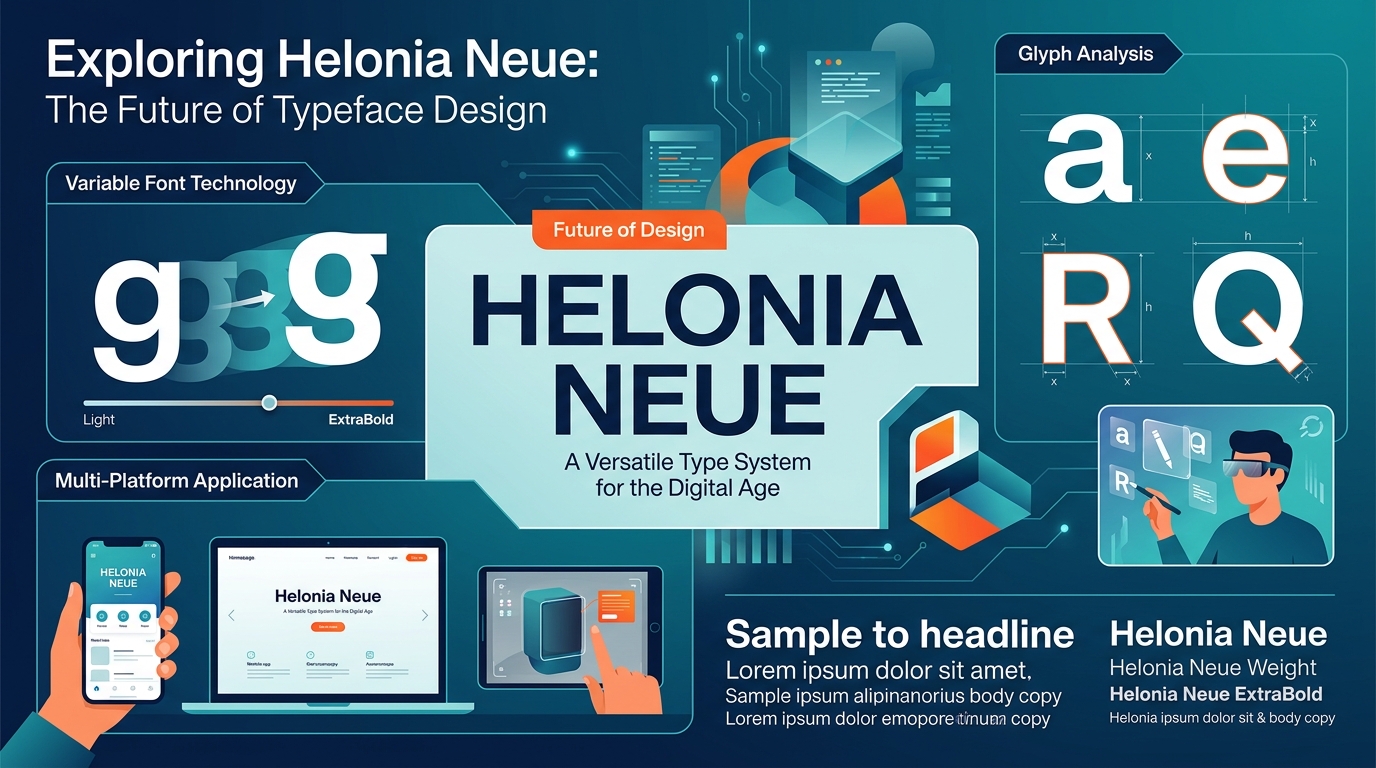
There’s a quiet shift happening in how successful companies think, build, and grow—and it doesn’t come with a flashy headline or a viral buzzword. Instead, it shows up in how teams adapt under pressure, how products evolve after launch, and how leaders make decisions when the future feels uncertain. This shift is best captured by the concept of helonia neue, a modern approach to innovation that prioritizes adaptability, resilience, and continuous reinvention.
For startup founders and tech professionals, helonia neue isn’t just an abstract idea. It’s a practical lens for navigating markets that change faster than business plans can keep up. In a world where yesterday’s breakthrough becomes today’s baseline, the ability to evolve is no longer optional—it’s survival.
Understanding Helonia Neue in a Practical Context
At its core, helonia neue represents a departure from rigid, linear thinking. Traditional models often assume stability: build a product, launch it, scale it. But reality rarely follows that script. Markets shift, customer expectations evolve, and new competitors emerge overnight.
Helonia neue embraces this uncertainty. It encourages building systems—whether products, teams, or strategies—that are designed to change. Instead of chasing perfection before launch, it prioritizes learning after launch. Instead of resisting disruption, it integrates it into the process.
Think of it as a mindset that treats change not as a disruption to manage, but as a constant to design around.
Why Helonia Neue Matters More Than Ever
The pace of technological change has fundamentally altered how businesses operate. Cloud computing, artificial intelligence, and global connectivity have compressed timelines and raised expectations. What once took years now happens in months—or weeks.
In this environment, companies that rely on static strategies often fall behind. Helonia neue offers a different path. It equips organizations to move with the market rather than react to it.
For entrepreneurs, this translates into real advantages. It means launching faster, learning quicker, and adjusting before small problems become existential threats. For larger organizations, it provides a framework to stay relevant without constantly reinventing the entire business.
The Philosophy Behind Helonia Neue
What makes helonia neue compelling is not just what it does, but how it thinks. It shifts the focus from control to responsiveness, from prediction to adaptation.
Instead of asking, “How do we get this exactly right?” it asks, “How do we improve this continuously?”
This subtle change in perspective has profound implications. It reduces the fear of failure, encourages experimentation, and creates space for innovation to emerge organically rather than being forced.
Helonia Neue in Product Development
One of the clearest applications of helonia neue is in how products are built and refined. In traditional development cycles, teams spend months—or even years—perfecting a product before releasing it to the market.
The problem is that by the time the product launches, the market may have already changed.
Helonia neue flips this model. It encourages early releases, rapid feedback, and ongoing iteration. Products become living systems rather than finished artifacts.
This approach doesn’t mean sacrificing quality. It means redefining quality as something that evolves over time, shaped by real user experiences rather than assumptions made in isolation.
Organizational Impact of Helonia Neue
Beyond products, helonia neue reshapes how organizations operate internally. It challenges hierarchical structures and promotes collaboration across teams.
In a helonia neue-driven organization, decision-making is more distributed. Teams are empowered to act on data and insights without waiting for layers of approval. This not only speeds up execution but also fosters a sense of ownership and accountability.
Communication becomes more fluid, and silos begin to break down. The result is an organization that feels less like a machine and more like an ecosystem—responsive, interconnected, and constantly evolving.
Comparing Traditional Thinking with Helonia Neue
To understand the shift more clearly, it helps to see how helonia neue contrasts with conventional approaches:
| Dimension | Traditional Model | Helonia Neue Model |
| Product Lifecycle | Fixed and linear | Continuous and iterative |
| Strategy | Long-term and rigid | Adaptive and flexible |
| Leadership Style | Directive and top-down | Empowering and decentralized |
| Innovation Approach | Planned and controlled | Experimental and evolving |
| Risk Management | Avoidance-focused | Learning-focused |
This comparison highlights a deeper truth: helonia neue is not just a method—it’s a cultural transformation.
The Role of Data in Helonia Neue
Data plays a critical role in enabling helonia neue, but not in the way many assume. It’s not about collecting massive amounts of information for the sake of it. It’s about using data to inform decisions in real time.
In this model, data becomes a feedback loop. It helps teams understand what’s working, what isn’t, and what needs to change. But it’s always paired with human judgment.
Numbers alone don’t tell the full story. Helonia neue recognizes the importance of context, intuition, and qualitative insights. The most effective decisions come from blending all three.
Challenges in Adopting Helonia Neue
Despite its advantages, transitioning to helonia neue is not always straightforward. Many organizations struggle with letting go of established processes. There’s comfort in predictability, even when it’s no longer effective.
One of the biggest obstacles is cultural resistance. Teams may be hesitant to embrace experimentation if failure is still stigmatized. Leaders may find it difficult to relinquish control in favor of more decentralized decision-making.
There’s also the challenge of balance. Too much flexibility can lead to chaos if not guided by a clear vision. Helonia neue requires structure—but a structure that supports change rather than restricts it.
Helonia Neue and the Startup Advantage
Startups are uniquely positioned to benefit from helonia neue because they are not burdened by legacy systems. They can build with adaptability in mind from the beginning.
This allows them to move faster, test ideas more freely, and pivot when necessary. In many cases, this agility becomes their greatest competitive advantage.
However, adopting helonia neue is not automatic. It requires intentional choices—about how teams are structured, how decisions are made, and how success is measured.
Startups that embrace this mindset early often find themselves better equipped to handle growth and scale without losing momentum.
The Future Shaped by Helonia Neue
As industries continue to evolve, the principles behind helonia neue are becoming increasingly relevant. The rise of remote work, decentralized teams, and AI-driven processes all point toward a future where adaptability is paramount.
Organizations that cling to static models will struggle to keep up. Those that embrace change as a core principle will not only survive but thrive.
Helonia neue aligns with this future by offering a framework that is inherently flexible. It doesn’t prescribe a single path but provides a way of thinking that can be applied across different contexts and industries.
Applying Helonia Neue in Everyday Work
For professionals looking to integrate helonia neue into their daily work, the shift begins with mindset. It means being open to change, willing to experiment, and comfortable with uncertainty.
It also involves practical steps. Shorter feedback cycles, closer collaboration with users, and a willingness to iterate can make a significant difference.
Leaders play a crucial role in this transition. By creating environments where experimentation is encouraged and failure is seen as a learning opportunity, they set the tone for the entire organization.
Over time, these small changes compound, leading to more resilient systems and more innovative outcomes.
Conclusion: Helonia Neue as a Strategic Imperative
Helonia neue is more than a concept—it’s a response to the realities of a fast-changing world. It acknowledges that stability is no longer the norm and that success depends on the ability to adapt continuously.
For startups, entrepreneurs, and tech professionals, this approach offers a powerful advantage. It transforms uncertainty from a liability into an asset and turns change into a driver of growth.
The organizations that succeed in the coming years will not be the ones with the most resources or the most detailed plans. They will be the ones that can evolve—quickly, intelligently, and consistently.
Helonia neue provides the blueprint for doing exactly that.


