










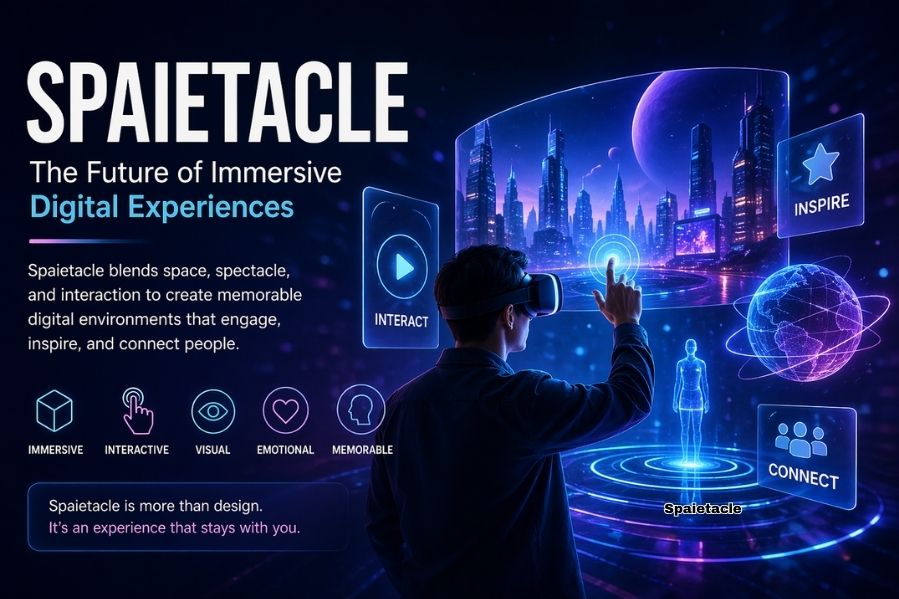
In today’s hyper-competitive digital economy, building a product that simply works is no longer enough. Users expect technology to anticipate their needs, adapt to their behavior, and deliver seamless, almost intuitive experiences. This is where spaietacle enters the conversation—a forward-thinking approach that is redefining how startups and tech professionals design, deploy, and scale digital solutions.
Spaietacle is not a passing trend or a niche concept reserved for cutting-edge labs. It represents a broader shift in how technology integrates with human behavior and environmental context. For founders and innovators, understanding this concept is becoming essential, not optional.
What Is Spaietacle and Why It Matters
At its essence, spaietacle blends spatial awareness, intelligent systems, and responsive design into a unified framework. It goes beyond traditional user experience by enabling systems to adapt dynamically in real time. Instead of reacting to user inputs alone, spaietacle-driven systems interpret context—location, behavior, timing, and intent—to deliver smarter outcomes.
Imagine opening a productivity app that reorganizes itself based on your daily habits, or a retail platform that changes its layout depending on whether you’re browsing casually or ready to purchase. These are not futuristic ideas—they are early manifestations of spaietacle thinking.
For startups, the relevance is immediate. Markets are crowded, attention spans are short, and differentiation is hard. Spaietacle offers a way to stand out by making products feel alive, responsive, and deeply personalized.
The Evolution Toward Spaietacle Thinking
To understand why spaietacle is gaining traction, it helps to look at how digital systems have evolved. Early software was static—fixed interfaces, predictable outputs, and minimal personalization. Then came user-centric design, which improved usability but still relied heavily on predefined pathways.
Now, we are entering an era where systems must think, learn, and adapt. This evolution is driven by advances in artificial intelligence, data analytics, and cloud computing. Spaietacle sits at the intersection of these technologies, turning them into practical tools for real-world applications.
What sets it apart is its emphasis on continuous adaptation. Instead of periodic updates, systems evolve in real time, learning from every interaction and refining their behavior accordingly.
Core Principles Behind Spaietacle
To implement spaietacle effectively, it’s important to understand the principles that underpin it. These are not rigid rules but guiding ideas that shape how systems are designed and experienced.
Context-Aware Intelligence in Spaietacle
Context is everything. A spaietacle-driven system doesn’t just process inputs; it interprets the environment in which those inputs occur. This includes user behavior, device type, location, and even external factors like time or weather.
For example, a travel app could prioritize different features depending on whether a user is planning a trip at home or navigating a city in real time. This level of awareness transforms functionality into meaningful experience.
Adaptive Learning Systems
At the heart of spaietacle lies the ability to learn. Machine learning models analyze patterns, predict outcomes, and continuously improve. This allows systems to move from reactive to proactive behavior.
A fintech platform, for instance, might adjust financial recommendations based on spending habits, market trends, and user goals—all without requiring manual input.
Seamless Human-Technology Interaction
Spaietacle emphasizes interfaces that feel natural. Whether through voice commands, gesture control, or responsive design, the goal is to minimize friction and maximize engagement.
The best systems are those that users don’t have to think about—they simply work, adapting quietly in the background.
Real-Time Data Integration
Data fuels everything. Spaietacle systems rely on continuous data streams to remain relevant. This requires robust infrastructure capable of processing information quickly and accurately.
Without real-time data, adaptability breaks down, and the system reverts to static behavior.
Spaietacle vs Traditional Digital Systems
To fully appreciate the shift, it’s helpful to compare spaietacle-driven systems with conventional approaches. The difference is not just technical—it’s philosophical.
| Aspect | Traditional Systems | Spaietacle Systems |
| Interaction Style | Input-response | Context-aware and predictive |
| User Experience | Fixed and linear | Dynamic and evolving |
| Data Processing | Batch or delayed | Continuous and real-time |
| Personalization | Basic segmentation | Deep individual adaptation |
| Innovation Approach | Iterative updates | Continuous evolution |
This comparison highlights why spaietacle is particularly valuable for startups seeking agility and differentiation.
Real-World Applications of Spaietacle
Spaietacle is not confined to theory—it is already influencing multiple industries. Its flexibility makes it applicable wherever user interaction and data intersect.
In healthcare, adaptive monitoring systems can track patient conditions and adjust alerts or recommendations instantly. In e-commerce, platforms can personalize the entire shopping journey, from homepage layout to checkout flow.
In logistics, companies are using spaietacle principles to optimize routes, reduce delays, and improve customer satisfaction. Meanwhile, in education, learning platforms are becoming more responsive, tailoring content to individual progress and engagement levels.
Even workplace tools are evolving. Collaboration platforms can now prioritize tasks, suggest workflows, and adapt interfaces based on team behavior, making productivity more intuitive.
Challenges and Considerations
Despite its promise, adopting spaietacle is not without obstacles. One of the most significant challenges is managing complexity. Building adaptive systems requires expertise across multiple domains, including data science, design, and engineering.
Data privacy is another critical concern. As systems collect and process more information, ensuring security and compliance becomes essential. Users must trust that their data is handled responsibly.
There’s also the question of scalability. While spaietacle can enhance user experience, implementing it at scale requires robust infrastructure and careful planning. Startups must balance ambition with practicality.
Finally, there’s a cultural shift involved. Teams need to move away from rigid development models and embrace continuous experimentation and iteration.
How Startups Can Embrace Spaietacle
For founders looking to integrate spaietacle into their products, the journey should begin with a clear understanding of user needs. Identify areas where adaptability can create immediate impact.
Start small. Introduce features that respond to user behavior, such as personalized recommendations or dynamic interfaces. As the system gathers data, expand its capabilities تدريجيًا.
Invest in the right technology stack. Cloud platforms, AI tools, and data pipelines are essential for building scalable adaptive systems. Equally important is assembling a team that understands both technology and user experience.
Most importantly, stay focused on value. Not every feature needs to be adaptive. The goal is to enhance the user experience, not complicate it.
The Future of Spaietacle in Digital Innovation
Looking ahead, spaietacle is poised to play a central role in the next wave of digital transformation. As technologies like augmented reality, edge computing, and advanced AI continue to evolve, the potential for adaptive systems will expand.
We are moving toward a world where digital experiences are no longer static interfaces but living systems. Products will learn, adapt, and evolve alongside their users, creating deeper connections and more meaningful interactions.
For entrepreneurs, this represents a significant opportunity. Those who embrace spaietacle early will be better positioned to lead, innovate, and capture market share.
Conclusion
Spaietacle is more than a concept—it is a strategic approach to building the next generation of digital experiences. By combining context awareness, adaptive learning, and real-time data, it enables systems that are not only functional but intelligent and responsive.
For startup founders and tech professionals, the message is clear: the future belongs to those who can create technology that evolves. Spaietacle provides a roadmap for achieving this, offering both inspiration and practical direction.
As the digital landscape continues to shift, one thing is certain—static systems will struggle to keep up. Adaptive, intelligent, and user-focused solutions will define success. And at the heart of this transformation lies spaietacle.